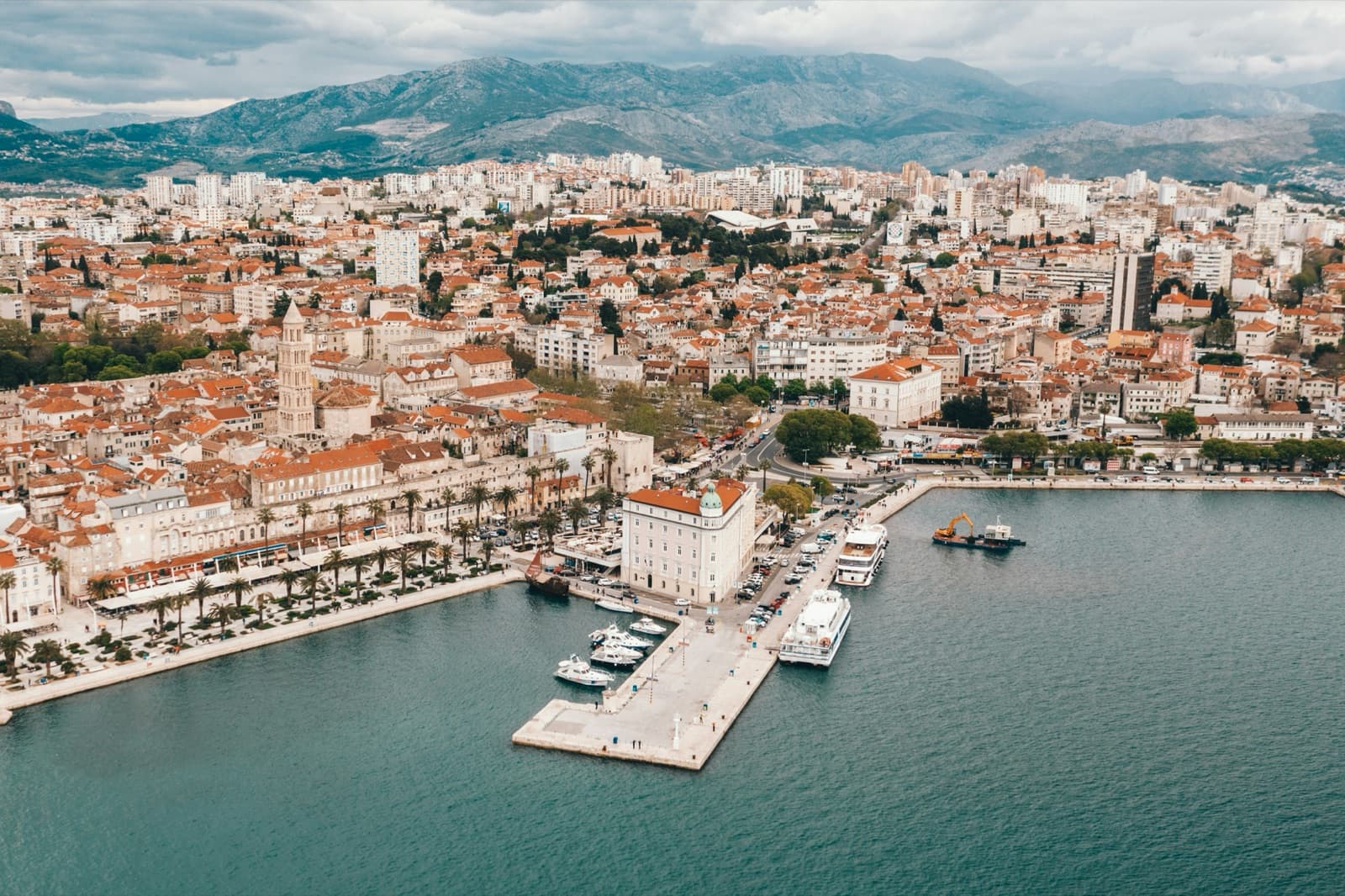
Split has 170,000 people. That's smaller than most mid-size European cities. Yet this sun-soaked Adriatic port has produced an almost absurd concentration of world-class athletes across basketball, tennis, football, water polo, rowing, sailing, and handball.
The numbers are hard to believe. Multiple NBA players. A Wimbledon champion. Olympic gold medalists in half a dozen sports. The oldest organized fan group in Europe. A unique beach ball game that's a protected cultural tradition. And a football club whose devotion borders on religion.
No city on Earth — per capita — comes close. Here's why Split became the sportiest small city in the world.
Basketball: From Adriatic Courts to the NBA
Split's basketball story is the most remarkable of all. In the late 1980s and early 1990s, KK Jugoplastika (named after their plastics company sponsor, later renamed KK Split) was the dominant force in European basketball, winning three consecutive European Championships (1989, 1990, 1991) — a feat no club has matched since. The players they produced didn't just play in the NBA — they changed how European players were perceived in American basketball forever.
Toni Kukoč — "The Waiter" Who Won 3 NBA Championships
Toni Kukoč was born in Split in 1968 and learned to play basketball on the city's outdoor courts. Before the NBA, he was already the best player in Europe — winning three European Player of the Year awards. When he joined the Chicago Bulls in 1993, he played alongside Michael Jordan and Scottie Pippen, winning three consecutive NBA championships (1996, 1997, 1998).
Kukoč was famous for his versatility. At 6'11", he could play point guard, shoot three-pointers, and make passes that seemed impossible. He was one of the first European players to prove that the NBA wasn't just for Americans. He was inducted into the Basketball Hall of Fame in 2021.
Walk through Split today and you can still find the courts where Kukoč first picked up a basketball.
Dino Rađa — Split's Gift to the Boston Celtics
Dino Rađa, born in Split in 1967, was another product of KK Split's legendary youth system. He joined the Boston Celtics in 1993 and quickly became one of the most effective post players in the league. In his first season, he averaged 15.1 points and 7.2 rebounds — impressive numbers for a rookie from a country most NBA fans couldn't find on a map.
Rađa was inducted into the Basketball Hall of Fame in 2018, cementing Split's reputation as a basketball factory.
Dražen Petrović — The Greatest European Player Who Ever Lived
Dražen Petrović wasn't born in Split — he was from Šibenik, about an hour north. But his legacy is inseparable from Croatian basketball and the generation of players that Split produced. Often called the greatest European basketball player of all time, Petrović's career with the New Jersey Nets was cut tragically short when he died in a car accident in 1993 at age 28.
His impact was enormous. He averaged 22.3 points per game in his final season and proved — definitively — that European players could be superstars in the NBA. Every European player who has succeeded in the NBA since owes something to Petrović.
Football: Hajduk Split and the Torcida
If basketball is Split's gift to the world, football is Split's obsession. Hajduk Split, founded in 1911, isn't just a football club — it's an identity. In Split, you don't choose to support Hajduk. You're born into it.
Poljud Stadium
Hajduk's home since 1979 is Poljud Stadium, a 35,000-seat arena designed by architect Boris Magaš. Its distinctive shell-shaped concrete roof is considered one of the finest examples of modernist sports architecture in Europe. Even if you don't care about football, Poljud is worth visiting for the building alone.
The stadium hosted the 1979 Mediterranean Games and has been the backdrop for some of Croatian football's most dramatic moments. On match days, the atmosphere is electric — 35,000 people singing, chanting, and living every minute of the game as if their lives depend on it.
The Torcida — Europe's Oldest Fan Group
The Torcida was founded on October 28, 1950, making it the oldest organized supporter group in Europe. Named after Brazilian football fans (torcida means "fans" in Portuguese), the group was inspired by the passionate crowds at the 1950 FIFA World Cup in Brazil.
Torcida isn't just about football. It's a cultural institution in Split. Their choreographed displays, songs, and unwavering loyalty to Hajduk — through relegation, financial crises, and everything else — represent something deeper about Split's identity: fierce independence, local pride, and a refusal to follow anyone else's rules.
Tennis: Goran Ivanišević's Wimbledon Miracle
In July 2001, Goran Ivanišević did something that sports writers still struggle to explain. As a wildcard entry ranked 125th in the world, he won Wimbledon — beating Patrick Rafter in a five-set final that is still considered one of the greatest tennis matches ever played.
Ivanišević grew up in Split, learning to play on the city's public courts. His powerful left-handed serve — once clocked at 206 km/h — was developed on these courts, and he never forgot where he came from. When he returned to Split after winning Wimbledon, an estimated 150,000 people packed the Riva waterfront to celebrate. In a city of 170,000, that means virtually everyone showed up.
The tennis courts where Ivanišević trained still exist in Split. Our sports heritage tour takes you to them.
Water Polo: A Dominant Dynasty
Split has a water polo tradition that rivals any city in the world. VK Jadran Split, founded in 1920, has won multiple Croatian championships and European titles. The city's coastline — with warm, calm Adriatic waters — creates a natural training ground for water polo players from childhood.
Croatia's national water polo team, heavily composed of Split-born players, has won Olympic gold and multiple World Championship medals. The sport is deeply embedded in Split's coastal culture — you'll see kids playing informal water polo matches in the shallow waters along the beaches.
Picigin: The Sport That Exists Nowhere Else
Perhaps the most uniquely Split tradition of all is picigin — a ball game played in knee-deep water at Bačvice Beach, just a 10-minute walk from Diocletian's Palace.
The rules are simple: keep a small, hard rubber ball in the air using your hands, and never let it touch the water. But the execution is anything but simple. Players dive acrobatically, leap sideways, and contort their bodies in mid-air to keep the ball alive. It's part sport, part performance art, and entirely Split.
Picigin has been played at Bačvice since the 1920s, and it was declared a protected intangible cultural heritage of Croatia in 2005. On any warm day, you'll see groups of locals playing it in the shallow water — from teenagers to men in their 70s.
No other city plays picigin. It belongs to Split, and Split alone.
Olympic Champions and Beyond
Split's sporting legacy extends far beyond the big-name sports:
- Rowing: Split-born rowers have won Olympic medals, including gold. The calm waters of Kaštela Bay provide perfect training conditions.
- Sailing: Croatia's Adriatic coast produces world-class sailors, and Split is at the center of it.
- Handball: Croatian handball has been a powerhouse, with Split contributing key national team players.
- Athletics: Split's warm climate and outdoor culture produce runners, swimmers, and multi-sport athletes who compete at national and international levels.
Walk along Split's Western Promenade (Zapadna obala) and you'll see monuments and plaques honoring the city's Olympic medalists — a who's who of athletic excellence from a city that, by population, has no business producing this many champions.
Why Does Split Produce So Many Athletes?
This is the question everyone asks, and there's no single answer. But several factors converge:
Climate. Split has 2,700 hours of sunshine per year. Outdoor sports are possible nearly year-round, and kids grow up playing outside from dawn to dusk.
Sea and geography. The Adriatic coastline creates natural conditions for water sports (swimming, water polo, sailing, rowing), while the surrounding mountains and Mediterranean terrain encourage physical activity.
Culture of competition. Split is famously competitive. Whether it's picigin, football, or who makes the best peka (a traditional Dalmatian dish), people in Split turn everything into a contest. This culture starts in childhood and never really stops.
Community pride. In a city of 170,000, elite athletes aren't distant celebrities — they're neighbors. Kids see Kukoč's old apartment, play on the same courts, and grow up believing that reaching the top is genuinely possible.
Strong club infrastructure. Hajduk, KK Split, VK Jadran, and other clubs have invested in youth development for decades. The talent pipeline from playground to professional is shorter and more direct here than in almost any other city.
Experience Split's Sports Heritage in Person
Most visitors come to Split for Diocletian's Palace, the beaches, and the national parks. But the city's sporting legacy is one of its most fascinating stories — and one that almost nobody tells on a typical tour.
Our Split NBA Legends & Sports Heritage Tour is the only tour in Croatia that takes you inside this world. Over 4.5 hours, you'll visit:
- Poljud Stadium — Hajduk Split's iconic home (entrance included)
- Gripe Sports Hall — where KK Split's basketball dynasty was built
- Bačvice Beach — where picigin has been played since the 1920s
- Historic tennis courts — where Ivanišević learned to serve
- The Museum of Split Sport — the city's athletic legacy in one place
- The Western Promenade — monuments honoring Split's Olympic champions
The tour is €353 per group (up to 8 people) — that's less than €45 per person for a group of 8. It's private, so the pace and focus are entirely up to you.
Whether you're a sports fan or not, this tour reveals a completely different side of Split — the passion, identity, and competitive fire that defines this city far more than any Roman palace.
Book the Split Sports Heritage Tour →
Quick Facts: Split Sports by the Numbers
| Fact | Detail |
|---|---|
| NBA players from Split | Toni Kukoč (Bulls), Dino Rađa (Celtics), and more |
| Basketball Hall of Famers | Kukoč (2021), Rađa (2018) |
| Wimbledon champion | Goran Ivanišević (2001, wildcard entry) |
| Oldest fan group in Europe | Torcida (founded 1950) |
| Picigin heritage status | Protected intangible cultural heritage (2005) |
| Poljud Stadium capacity | 35,000 seats, designed by Boris Magaš (1979) |
| Average sunshine | 2,700+ hours per year |
| Population | ~170,000 |
Related Tours and Posts
- Split NBA Legends & Sports Heritage Tour — €353/group, 4.5 hours. The only sports heritage tour in Croatia.
- Split Evening Walking Tour — €16/person, 1 hour. See the palace where it all started.
- Split Game of Thrones Walking Tour — €40/person. A different side of Split's famous locations.
- Best Time to Visit Split — Plan your trip around the best weather and fewest crowds.