Trogir is one of the most perfectly preserved medieval towns on the Adriatic. UNESCO agrees — they inscribed the entire old town as a World Heritage Site in 1997, citing its remarkable continuity of urban fabric from the Hellenistic period through the Romanesque and Baroque eras. It is, by any measure, extraordinary.
And yet most visitors experience roughly 5% of it.
The standard Trogir visit goes something like this: arrive by bus or tour van, walk through the old town gate, admire the Cathedral of St. Lawrence, maybe peek inside Kamerlengo Fortress, stroll the Riva promenade, eat an overpriced pizza, and head back to Split. Total time: two hours. The box is checked. The Instagram photo is posted. Trogir is "done."
It is not done. Not even close.
The real Trogir — the one that locals live in and love — exists in the quiet courtyards behind unmarked doors, on the beaches across the bridge that tourists never cross, in the morning fish market before the first tour bus arrives, and on the rooftops where the sunsets rival anything on the Dalmatian coast. This is the Trogir that rewards the curious, and it is wide open for anyone willing to go a little further than the cathedral square.
Here are ten hidden gems that most tourists miss entirely.
What Most Tourists Do (And Why They're Missing Out)
The typical Trogir itinerary is remarkably consistent. Tour groups arrive between 10 AM and 2 PM, funnel through the Land Gate, congregate at the Cathedral of St. Lawrence (which is genuinely magnificent — the Radovan Portal alone justifies the visit), walk past the Cipiko Palace, perhaps enter Kamerlengo Fortress if there's time, and loop back along the waterfront.
This is a fine introduction. But it treats Trogir as a monument rather than a living town. The old town is just one piece of a much larger picture that includes Ciovo island directly across the channel, the Pantan nature reserve to the west, hidden Napoleonic fortifications, Renaissance courtyards that most guidebooks don't mention, and a local food scene that happens away from the tourist-facing Riva.
If you have more than two hours — and ideally an overnight stay — Trogir opens up into something genuinely special. Here's where to look.
The 10 Hidden Gems
1. The Rooftop of Kamerlengo Fortress at Sunset
Most visitors enter Kamerlengo, walk around the interior courtyard, and leave. This is a mistake. The fortress has a rooftop walkway, and climbing to the very top rewards you with one of the finest 360-degree panoramas in Dalmatia.
From the highest point, you can see the entire old town spread out below you — a tapestry of terracotta rooftops and stone bell towers — with the Trogir Channel in the foreground, Ciovo island stretching south, the mountains of the mainland rising to the north, and the open Adriatic to the west. The view in every direction is unobstructed.
Now time this for golden hour. As the sun drops toward the sea, the ancient stone turns warm amber and the water in the channel catches the light. It is, without exaggeration, one of the best sunset viewpoints on the entire Croatian coast — and it competes with none of the crowded spots in Split or Dubrovnik.
Tip: Arrive at least 45 minutes before sunset. The fortress closes at a set time, so check the current schedule. In summer months, closing time is late enough to catch the golden hour.
If sunset-chasing is your thing, see our full guide to the best sunset spots in the Split region, which includes several Trogir options.
2. Ciovo Island Beaches
Here is Trogir's best-kept open secret: the island directly across the channel has beaches, and most tourists never set foot on it.
Ciovo is connected to Trogir's old town by a small pedestrian bridge. Cross it, and within a few minutes you're on a different island with a completely different pace. The north side of Ciovo faces the old town; the south side faces the open sea.
Okrug Gornji is the most popular beach on Ciovo — a long, gently sloping pebble beach with warm, shallow water and a string of beach bars. It's well known to locals and apartment renters, but relatively few day-trippers from Split make it here.
The real reward, though, comes from walking further. Continue past Okrug Gornji along the coastal path and you'll reach smaller, quieter coves with pine trees growing right down to the water's edge. The water is exceptionally clear, the shade is natural, and you might have an entire cove to yourself outside of July and August.
Getting there: Walk across the bridge from Trogir old town. Okrug Gornji is about a 20-minute walk, or take the local bus. For the hidden coves, add another 10-15 minutes on foot.
3. The Benedictine Monastery Art Collection
Tucked away in the Convent of St. Nicholas on the northern edge of the old town, this small museum houses a collection that punches far above its weight. The centerpiece is a Kairos relief — an ancient Greek marble carving depicting the god of the fleeting moment, the personification of seizing the right opportunity.
This particular Kairos relief dates to the 3rd or 4th century BC and is considered one of the most important ancient artworks in Croatia. The figure is shown with wings on his feet and a long forelock of hair (which you grasp to "seize the moment" — once he passes, the back of his head is bald and there's nothing to hold).
The monastery also contains a fine collection of medieval religious art, illuminated manuscripts, and liturgical objects. The nuns of St. Nicholas have been custodians of this collection for centuries.
Very few tourists visit. The museum is small — you can see everything in 20 to 30 minutes — and the entrance fee is modest. It's the kind of place where you walk in expecting little and leave genuinely moved.
4. North Gate and the Morning Fish Market
If you want to see the Trogir that existed before UNESCO, before the guidebooks, and before the souvenir shops, come to the North Gate early in the morning.
Just outside the gate, on the mainland side of the small bridge, local fishermen sell the night's catch directly from their boats or from simple folding tables. The selection depends entirely on what the sea gave up that night — you might find sea bass, bream, squid, sardines, or octopus, all pulled from the Adriatic hours earlier.
This is not a sanitized farmer's market for tourists. This is where local grandmothers come to buy fish for lunch, and they haggle with the fishermen in rapid-fire Croatian. The smell is briny and authentic. The prices are fair. The atmosphere is entirely real.
Timing matters: The market is most active between 6:30 and 8:30 AM. By mid-morning it's mostly done. This alone is a compelling reason to stay overnight in Trogir rather than visiting as a day trip.
5. Pantan Estuary and Nature Walk
Two kilometers west of Trogir's old town, the Pantan River meets the Adriatic in a small estuary that feels like it belongs in a different country entirely. After hours of walking on stone streets, the sudden shift to green reeds, still water, and birdsong is startling.
The Pantan nature area includes a short walking trail along the river, the remains of an old stone watermill (one of the few surviving examples in this part of Dalmatia), and a quiet pebbly beach where the river flows into the sea. The water here is a mix of fresh and salt, and it's noticeably cooler than the open-sea beaches.
Birdwatchers will find herons, kingfishers, and various wading birds depending on the season. The vegetation is lush and Mediterranean — oleander, fig trees, and aromatic herbs growing wild along the path.
How to get there: Walk or cycle west along the coast from Trogir. It's flat and easy. The nature area is not signposted particularly well, so look for the Pantan mill on your map. There's no entrance fee.
6. The Loggia and Clock Tower at Night
The Town Loggia sits on the main square directly opposite the cathedral. During the day, it's a nice piece of architecture that most people photograph as background to the cathedral. At night, it becomes something else entirely.
When the day-trip crowds leave Trogir — and they all leave, because almost nobody stays overnight — the old town undergoes a transformation. The main square empties. The stone walls, lit by warm artificial light, glow against the dark sky. The clock tower above the loggia ticks audibly in the silence. You can hear your own footsteps echoing off 800-year-old walls.
The loggia itself is an open-air structure with arched openings, originally used as a public court and gathering place. At night, standing inside it and looking across the empty square to the illuminated cathedral facade, you get a sense of the town's medieval character that is simply impossible during daytime visiting hours.
This is the strongest argument for staying overnight in Trogir. The contrast between daytime (busy, touristy, sometimes hectic with cruise groups) and nighttime (atmospheric, quiet, almost cinematic) is dramatic.
7. Trogir's Courtyards and Hidden Passages
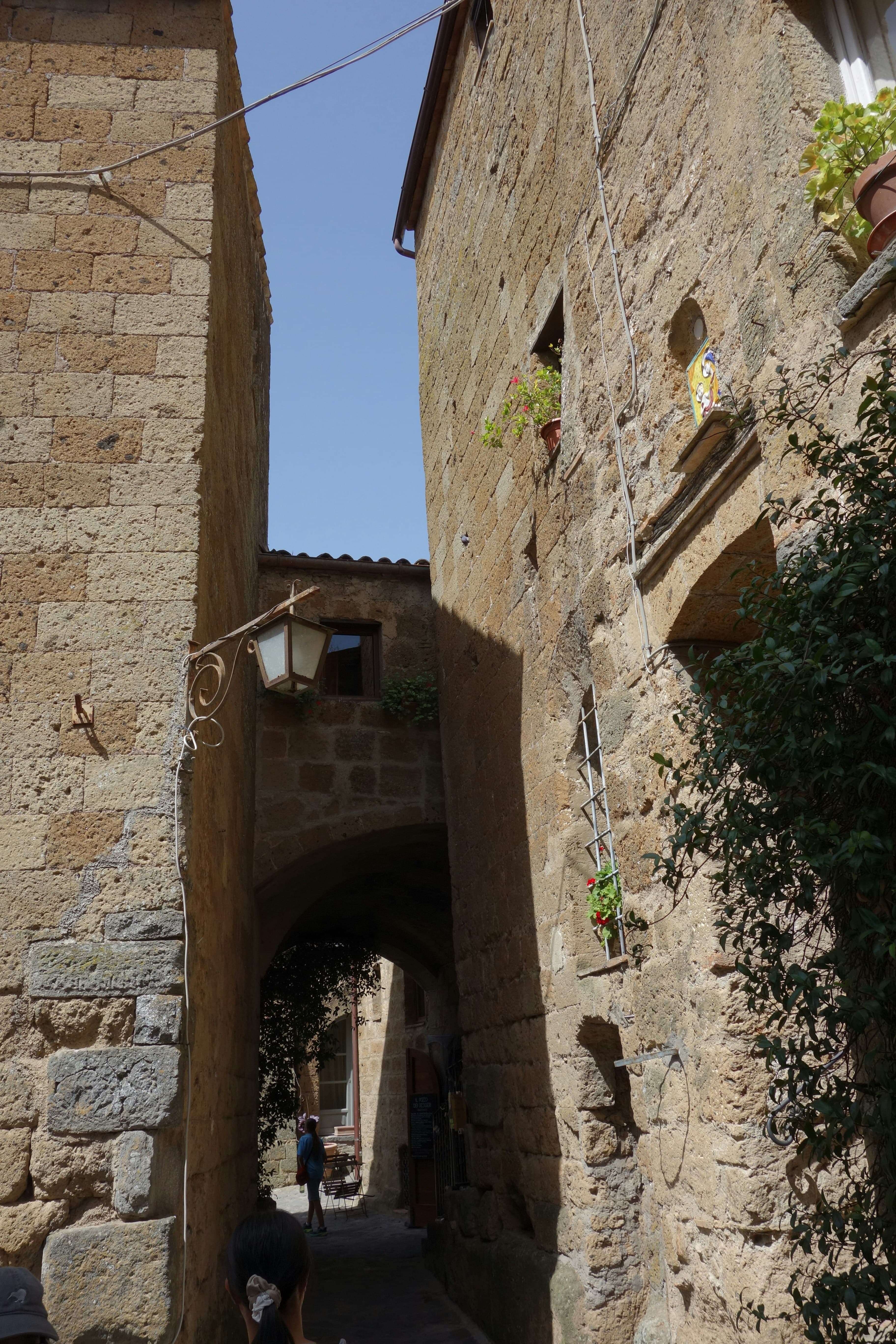
Trogir's old town has a secret layer. Many of the medieval and Renaissance stone buildings contain interior courtyards that are not visible from the street. These were private family spaces — open-air rooms surrounded by galleries, staircases, and carved stone balustrades. Some feature old wells, sculptural details, or overgrown gardens.
Here is the key: if a street-level door is unlocked and appears to lead into a building's interior passage, it is very likely a semi-public passage or shared courtyard. Pushing open these doors (gently, respectfully) often reveals hidden architectural treasures that guidebooks never mention. The Cipiko Palace courtyard is one of the better-known examples, but there are dozens of others throughout the old town.
Wander the narrow lanes between the main square and the North Gate. Look for arched doorways, stone stairways visible through open doors, and passageways that seem to lead between buildings. Trogir's old town is small enough — roughly 300 meters by 150 meters — that you can explore every street and alley in an hour without retracing your steps.
Our Trogir Secrets Guided Walking Tour covers many of these hidden spots with a local guide who knows which doors to push open and which stories to tell. It's 80 minutes and costs just 15 euros per person.
8. Marmont's Gloriette (Lookout Tower)
On the tiny island of Otok, connected to the mainland by a short causeway just northwest of Trogir's old town, sits a small and mostly forgotten Napoleonic-era fortification known as Marmont's Gloriette.
Named after Marshal Marmont, the French military governor of Dalmatia during Napoleon's brief rule over the region (1806-1813), the gloriette was built as a defensive lookout point guarding the approach to Trogir from the mainland. It's a compact, circular stone structure with views over the channel, the old town, and the surrounding coastline.
The history is fascinating: during the Napoleonic period, Trogir (like much of coastal Croatia) was part of the French Empire's "Illyrian Provinces." This tiny fortification is a physical reminder of a chapter in Dalmatian history that most visitors know nothing about.
Almost nobody visits. You can walk there in about 10 minutes from the old town. There's usually no entrance fee and no other visitors. For anyone interested in military history or simply wanting a quiet viewpoint away from the old town, it's worth the short detour.
9. Local Konoba Dining on Ciovo
Eating in Trogir's old town is fine. The restaurants on the Riva serve decent food with beautiful views, and the prices are not outrageous by Adriatic coast standards. But the best meal you'll have near Trogir is probably across the bridge on Ciovo.
A konoba is a traditional Dalmatian tavern — typically family-run, with a short menu of whatever is fresh that day, grilled fish, homemade bread, house wine from the barrel, and an emphasis on simplicity done perfectly. Several konobas on the Ciovo waterfront, particularly in the villages of Arbanija and Okrug Donji, serve meals at tables right on the water's edge.
The fish was likely caught that morning by the restaurant owner's husband or cousin. The octopus salad is dressed with local olive oil. The wine is made from grapes grown on the hillside behind the building. The price for all of this is roughly half of what you'd pay for an equivalent meal in the old town.
This is the way locals eat in the Trogir area. Cross the bridge, pick a konoba with a few boats tied up out front, and trust the waiter's recommendation. You will not be disappointed.
10. The Cathedral Bell Tower Climb
The Cathedral of St. Lawrence is Trogir's most famous building, and every visitor admires it from the square. The Radovan Portal (the main entrance, carved in 1240) is photographed thousands of times a day. The interior is toured dutifully.
But the bell tower climb is skipped by the vast majority.
This is a mistake. The tower rises in stages — Romanesque at the base, Gothic in the middle, Renaissance at the top — and the ascent takes you through narrow stone stairways that feel genuinely medieval. The steps are worn smooth by centuries of use. Light enters through small arched windows. The walls press in. It is atmospheric in the truest sense.
At the top, the view is breathtaking. You look straight down into the cathedral square, across the old town rooftops to Kamerlengo Fortress, over the channel to Ciovo, and out to the open sea. On a clear day, you can see the islands of Drvenik and Solta on the horizon.
The climb takes about 10 minutes and costs a few euros. It is the single best value experience in Trogir, and the fact that most visitors skip it remains one of the town's great mysteries.
How to Experience Trogir Like a Local
The difference between a tourist visit and a local experience in Trogir comes down to three things: timing, duration, and willingness to cross the bridge.
Come early or come late. The cruise ship and tour bus crowds descend on Trogir between 10 AM and 3 PM. Before and after that window, the old town belongs to residents, overnight guests, and the occasional cat. The morning fish market, the empty evening streets, the golden hour light on Kamerlengo — all of these require being there outside the peak window.
Stay overnight. This is the single most impactful thing you can do. An overnight stay transforms Trogir from a two-hour stop into a genuinely immersive experience. Walk the old town at midnight. Have breakfast at a local bakery before the tourists arrive. Watch the fishermen come in at dawn. The accommodation options inside the old town are excellent — stone apartments with thick walls and sea views, often at lower prices than equivalent places in Split.
Rent a bike and explore Ciovo. The island is larger than it looks on a map, and there are beaches, villages, and viewpoints scattered along its coastline. A bicycle lets you cover ground efficiently and reach coves that would take too long on foot.
Take the walking tour, then go deeper on your own. Our Trogir Secrets Guided Walking Tour gives you the historical and architectural framework — the stories behind the stones — in 80 minutes. After that, use this list and spend the rest of the day exploring the hidden gems yourself. The combination of guided context and independent discovery is the ideal way to experience any historic town.
For a more in-depth private experience, the Trogir Private Walking Tour covers the town at your own pace for 150 euros per group — excellent value if you're traveling with family or friends.
Getting to Trogir from Split
Trogir is one of the easiest day trips from Split. The town sits on a small island wedged between the mainland and Ciovo island, about 27 km west of Split.
By car: 25-30 minutes via the coastal highway (D8) or the motorway. Parking is available outside the old town — do not try to drive into the old town itself, as the streets are pedestrian-only and roughly the width of a horse cart.
By bus: Bus #37 runs regularly between Split and Trogir, takes about 45 minutes, and costs a few euros each way. It departs from the main bus station near Split's waterfront. Buses run frequently throughout the day, so there's no need to plan around a rigid schedule.
By tour: If you'd rather not navigate transport logistics, the Trogir Half Day Tour from Split is a comfortable 4-hour experience at 65 euros per person that includes guided exploration and round-trip transport. It's a popular option for cruise passengers and anyone who wants to maximize time in the town rather than time on the bus.
For a complete overview of what's possible from Split in a single day, see our complete guide to day trips from Split.
FAQ: Trogir Beyond the Basics
Is Trogir worth more than a half day?
Absolutely. The standard half-day visit covers the UNESCO highlights, and that's valuable. But the hidden gems — the beaches, the evening atmosphere, the morning fish market, the Ciovo konobas — only reveal themselves with more time. If you can stay overnight, do it. The old town after dark is a completely different place.
Are there beaches in Trogir?
Yes, and they're excellent. The old town island itself doesn't have beaches, but Ciovo island — connected by a short bridge — has several. Okrug Gornji is the largest and most popular, with warm shallow water and beach facilities. Walk further along the coast for quieter coves with natural pine shade. The Pantan estuary area, 2 km west of old town, also has a small, pleasant beach where the river meets the sea.
Is Trogir better than Split for a day visit?
They're different experiences. Split is a larger city with Diocletian's Palace, Marjan Hill, a lively restaurant scene, and more nightlife. Trogir is smaller, more intimate, and easier to explore on foot. If you only have one day and have to choose, Split offers more variety. If you have two or more days, absolutely add Trogir — its compact old town, accessible beaches, and quieter atmosphere make it an ideal complement to Split.
Both are easily reached from each other. Many travelers base themselves in Split and visit Trogir as a day trip, or vice versa. We also offer combined shore excursions for cruise passengers that cover both towns — see our shore excursion guide for details.
When is the best time to visit Trogir?
May, June, and September offer the ideal balance: warm weather, swimmable sea temperatures, long daylight hours, and manageable crowds. July and August are peak season — the town is beautiful but busy, especially between 10 AM and 3 PM when tour groups are present.
The shoulder months of April and October are pleasant for walking and sightseeing, though the sea may be too cool for comfortable swimming. Winter is quiet and atmospheric — you'll have the old town almost entirely to yourself — but many restaurants and attractions operate on reduced hours.
Can you stay overnight in Trogir old town?
Yes, and we strongly recommend it. The old town has numerous stone apartments and boutique guesthouses available on standard booking platforms. Staying inside the walls means you can experience the empty morning streets, the fish market, and the magical nighttime atmosphere that day-trippers never see. Prices for old town apartments are often lower than comparable options in Split, particularly outside peak summer.
Explore Trogir with Time Travel Split
We run several tours that include Trogir, each offering a different angle on this remarkable town:
- Trogir Secrets: Guided Walking Tour — 15 euros/person, 1 hour 20 minutes. The hidden stories behind the stones.
- Trogir Half Day Tour from Split — 65 euros/person, 4 hours. Complete Trogir experience with transport from Split.
- Trogir Private Walking Tour — 150 euros/group, 1.5 hours. Your own guide, your own pace.
All of our tours can be viewed and booked directly on our website. If you have questions about Trogir, want help planning your visit, or need advice on whether to stay overnight or visit as a day trip, get in touch — we know this town inside and out, and we're happy to help.