Most visitors to Dalmatia fly into Split or Zadar and immediately head to the famous stuff — Krka, Plitvice, Dubrovnik. The stretch of coast between Zadar and Split barely registers as a destination in its own right. It's treated as a bus ride or a highway segment, something to get through on the way to somewhere else.
That's a mistake.
We recently drove this corridor over two days — Biograd na Moru on day one, Split on day two — and it reminded us why the best parts of Dalmatia are often the ones nobody's marketing to you.
Here's what we found, where we ate, and how to plan it yourself.
Day 1: Things to Do in Biograd na Moru
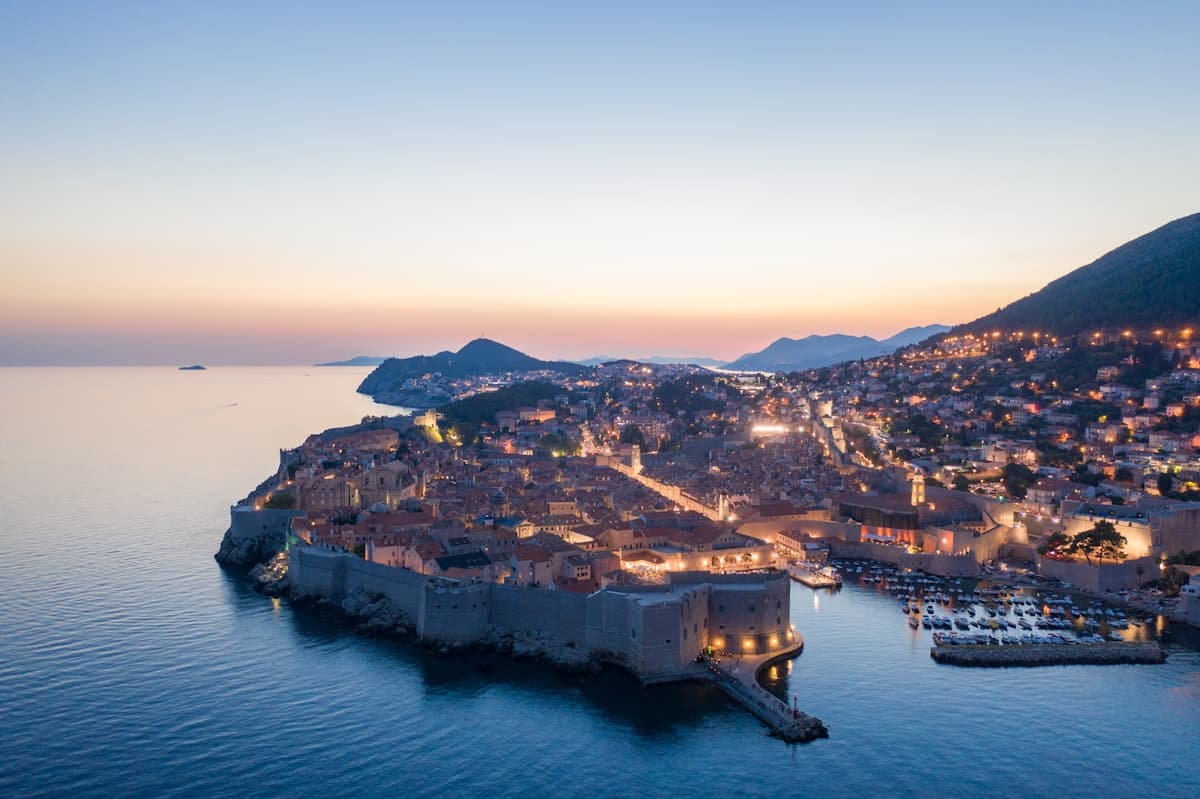
Biograd na Moru sits about 30 km south of Zadar on the Adriatic coast. It was the seat of Croatian kings in the 11th century — coronations happened here. Today it's a quiet marina town with stone streets, a handful of local restaurants, and a pace that feels about 50 years removed from Split's tourist energy.
That contrast is exactly the point.
Where to Eat in Biograd: Konoba Barba
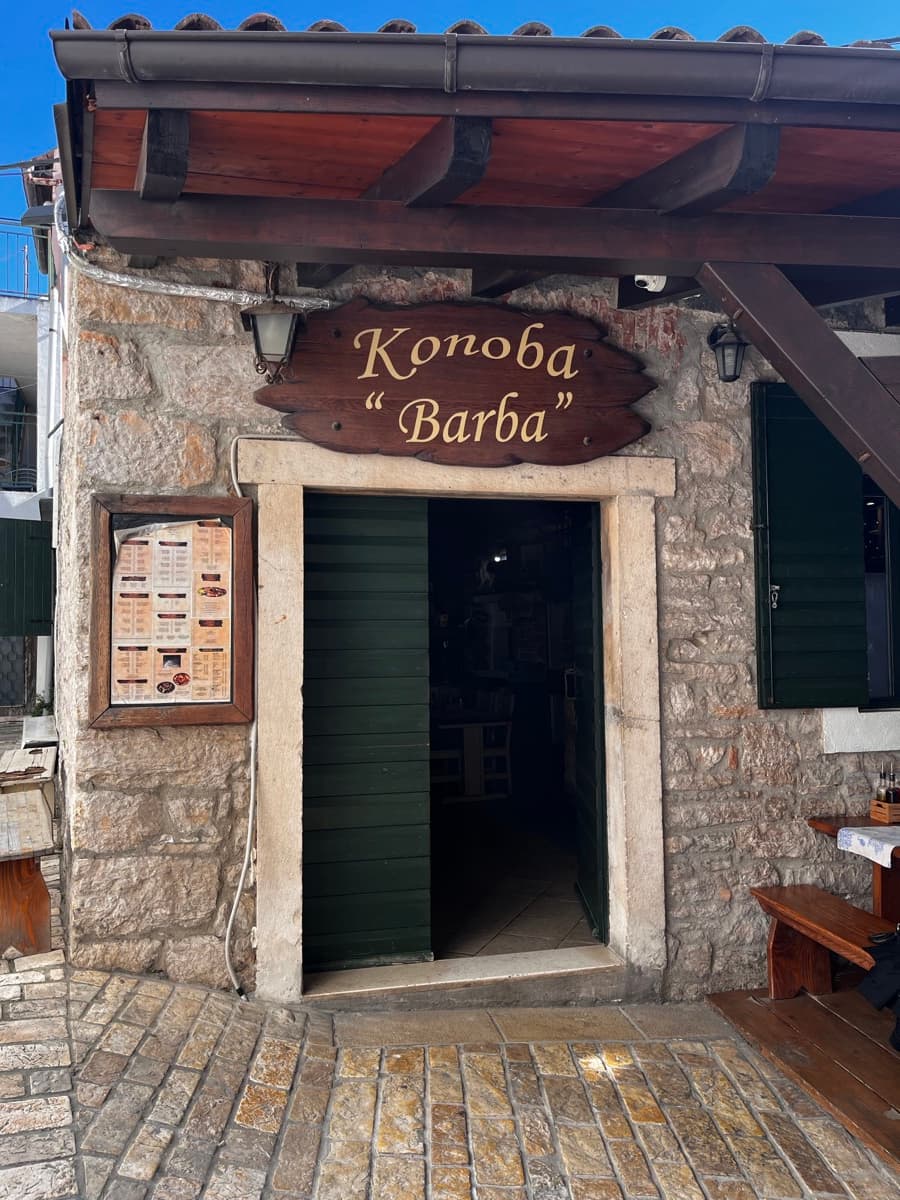
We didn't plan this. Someone mentioned a place with good fish, and we ended up at Konoba Barba — a traditional Dalmatian konoba tucked into a stone building with thick walls, wooden benches, and the kind of interior that hasn't changed in decades.
The srdele s gradela (grilled sardines) came first. Open flame, served with nothing but lemon and blitva — Swiss chard sautéed with potatoes and olive oil. That's the whole dish. It's also one of the best things you'll eat on the Dalmatian coast, and it costs almost nothing.

For the hungrier members of the group: domaći roštilj — grilled meat with fries and ajvar, washed down with a cold Karlovačko. Total bill for the table was less than what most Split waterfront restaurants charge for a single main course.

Tip: Konoba Barba isn't on most tourist radar apps. If you're driving through Biograd, ask a local or just look for the wooden sign on the stone building. You'll smell the grill before you see it.
Bistro Europa — Biograd's Most Instagrammable Corner
A few streets from the waterfront, we stumbled onto Bistro Europa. Colorful chairs spilling onto the sidewalk, pink-and-white checkered walls, old wine barrels repurposed as tables, and a hand-painted chef logo that looks like it's been there since the '80s. The whole scene looks like someone gave a Mediterranean grandmother unlimited access to a paint store.
We didn't eat here — Konoba Barba had done its damage — but it's worth a walk-by just for the photos. If you're the type who plans your day around good coffee spots, this is it.

Biograd Beach and Waterfront Swimming Pool
Biograd's waterfront is calm. No cruise ships, no crowds, no vendors trying to sell you lavender sachets. Just the Adriatic, pebble beaches, and crystal-clear water shallow enough to see every stone on the bottom.
We found a spot near the town's outdoor swimming pool complex — a large public pool right on the waterfront, open to the public. It's the kind of thing that would be a major tourist attraction in most countries but in Biograd it's just... there. Locals swim laps. Kids jump off the edge. Nobody's taking a video for Instagram.

If you've just come from the chaos of Zadar or Split, Biograd is the reset button.
Pine-Shaded Promenade
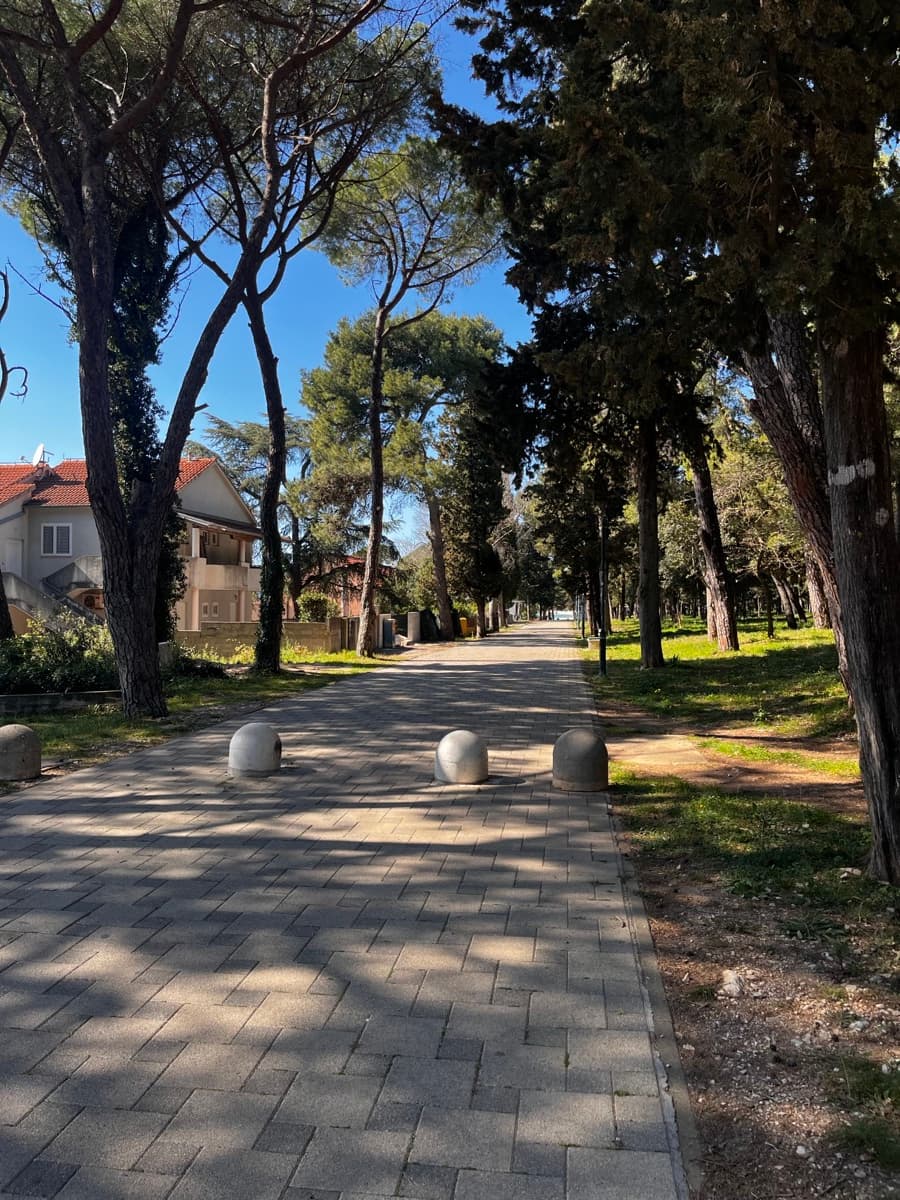
Behind the waterfront, there's a shaded promenade lined with Mediterranean pines — old, tall, with thick trunks and canopies that block the afternoon sun entirely. Stone pathways, globe lamps, benches. It's where locals walk in the evening. Not a "park" in the manicured city sense, more like a forest that happens to have a path through it.
Day 2: Walking Tour and Sightseeing in Split
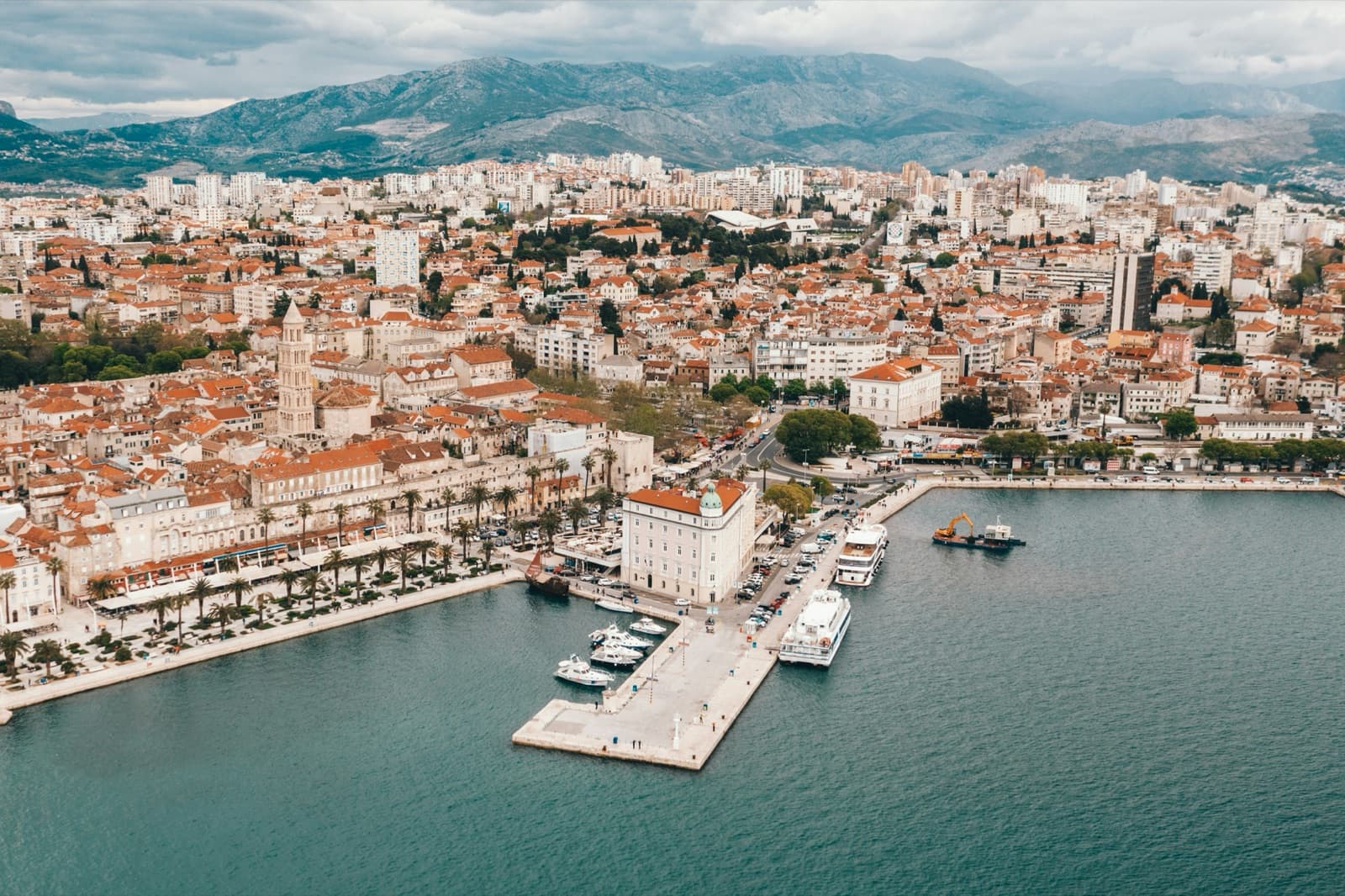
Split is the opposite of Biograd in every way. It's loud, layered, and lived-in — and it's where you'll understand why this Dalmatia road trip is worth the drive. Diocletian's Palace isn't a museum — it's an apartment building, a bar district, and a 1,700-year-old Roman ruin all at once. People do their laundry inside Roman walls. Cats sleep on columns that are older than most countries.
We spent the morning on a walking tour through the old town. If you're driving the coast and only have one day in Split, this is how to spend it.
The Cathedral of Saint Domnius
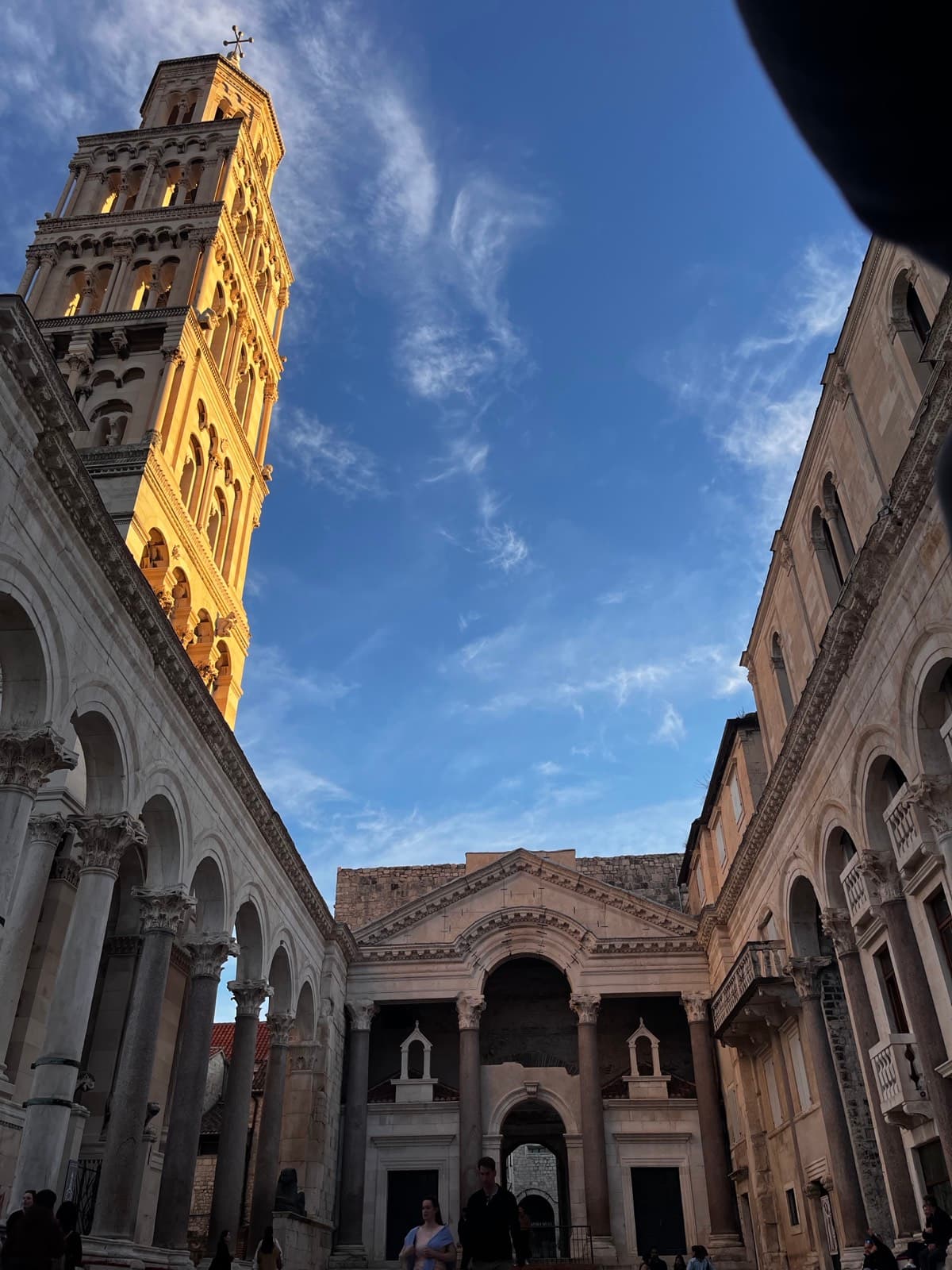
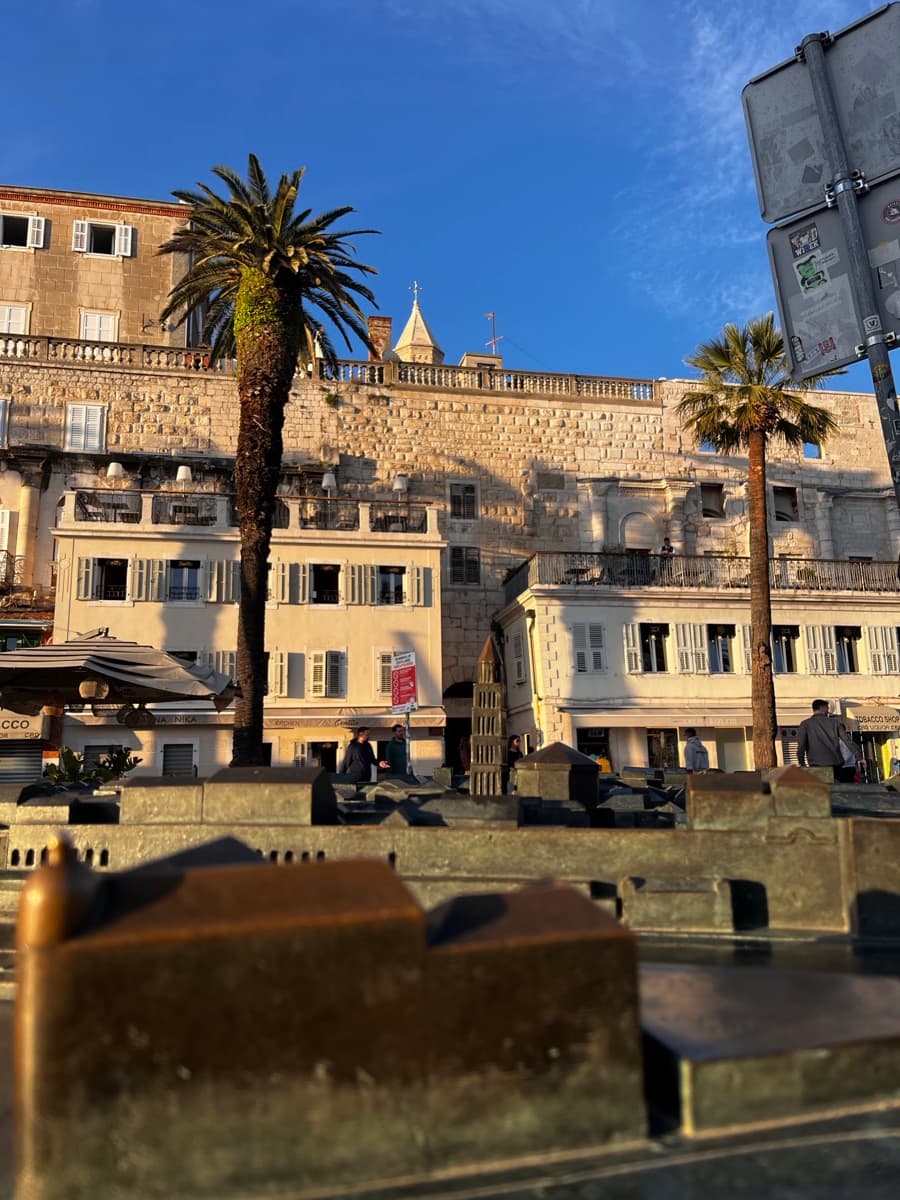
You can read about the Cathedral of Saint Domnius in a guidebook. But the real experience is standing in the Peristyle — the open courtyard at the heart of Diocletian's Palace — looking straight up, and seeing the golden bell tower catch the morning light against a perfect blue sky.
It's the oldest Catholic cathedral in the world still in use in its original structure, built as Diocletian's mausoleum in the 4th century and converted into a church in the 7th century. That's 1,700 years of continuous use. The building outlasted the empire that built it.
Our tip: Go early in the morning or late in the evening. By 11am the Peristyle fills with tour groups and the magic is diluted. Our Split Old Town Evening Walking Tour takes you through the palace at golden hour, when the day-trippers are gone and the stone glows in the last light.
Frane Matošić — The Legend on the Wall
Most tourists walk right past it. Near Marmontova ulica, there's a large mural dedicated to Frane Matošić (1918–2007), a Hajduk Split legend. The "1918–2018" on the mural marks a hundred years since his birth — a centennial tribute from the city to one of its football icons. The mural shows his portrait alongside the Hajduk crest, with the words "A LEGEND" in block letters.

If you know Croatian football history, this is a shrine. If you don't, it's a reminder that Split's identity runs deeper than Roman ruins and Game of Thrones filming locations. This city breathes sport — basketball, football, tennis, water polo — and the evidence is literally painted on the walls.
Want the full story? Our Split Sports Heritage Tour covers Hajduk, NBA legends Kukoč and Rađa, Ivanišević's tennis courts, and more. Or read our deep-dive on why Split is the sportiest small city on Earth.
Lunch at Basta Gourmetbar
After the walking tour, we landed at Basta Gourmetbar — a modern spot near the waterfront with floor-to-ceiling windows looking out over Split's harbor. The vibe is elevated but not stuffy. Through the glass, you can watch Jadrolinija ferries pulling in and out while you eat.
We didn't photograph the food — a rare oversight for a group that documented every sardine in Biograd — but the view through Basta's windows, with the harbor and islands in the background, was worth the stop alone. It's a nice contrast to the traditional konoba experience of day one.

The Riva
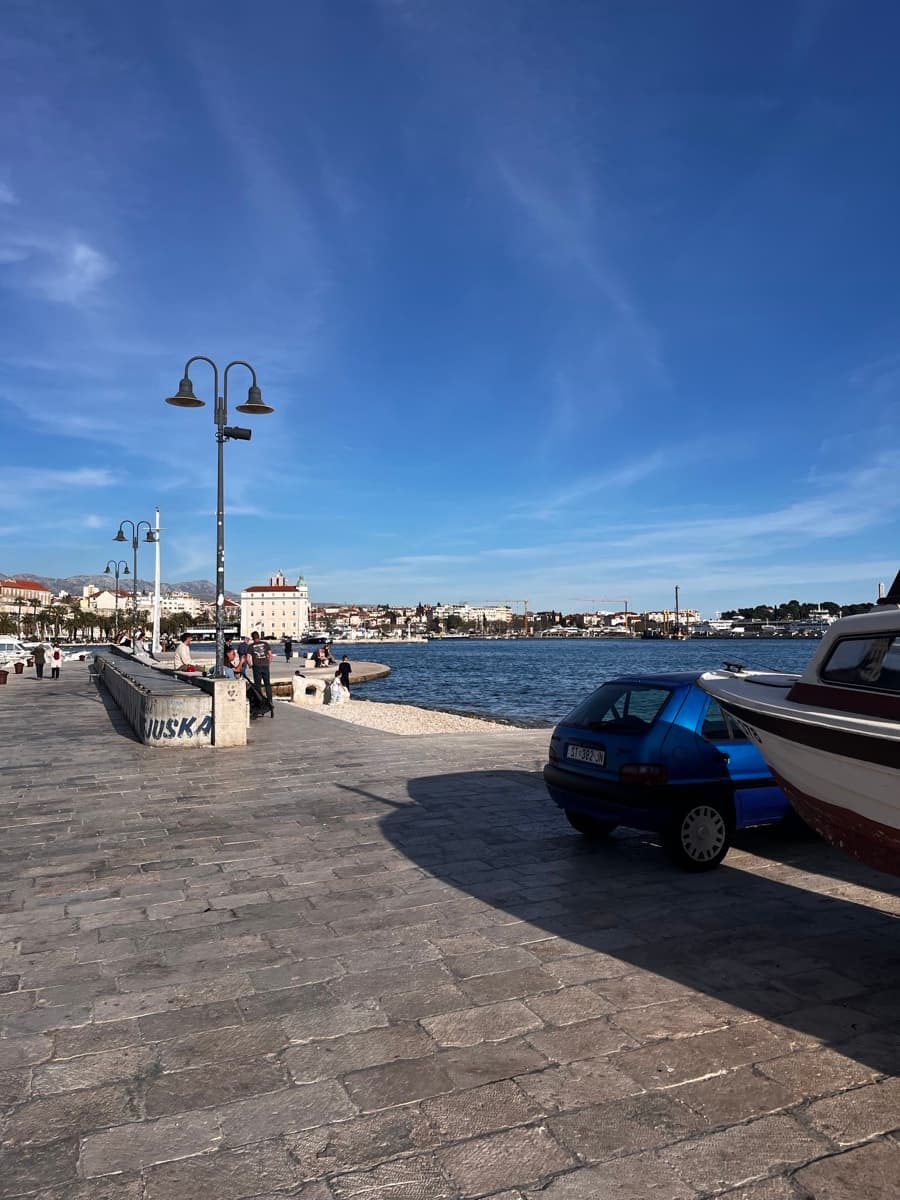
No Split visit is complete without a walk along the Riva — the city's famous waterfront promenade. Palms, stone, water, mountains behind. It's the living room of the city. Locals sit here for three-hour coffees and nobody blinks. Tourists take the same photo from the same angle and it's somehow always good.
If you're finishing a two-day road trip, this is where you do it. Coffee on the Riva, the Adriatic in front of you, and the feeling that you've actually seen something real — not a theme park version of Croatia.
Planning Your Route: What to See Between Zadar and Split
We drove straight from Biograd to Split on day two. If you have more time — or want to stretch this into a 3-day trip — the coastal road between the two cities passes through some of Dalmatia's best stops:
Šibenik (30 min south of Biograd)
Home to the Cathedral of St. James, a UNESCO World Heritage site built entirely of stone without a single brick or wooden beam. The old town is compact and underrated. It's also the gateway to Krka Waterfalls — the national park entrance is just 15 km away.
If you're debating whether to add Krka to this trip, read our Krka vs Plitvice guide to decide.
Primošten (1 hour south of Biograd)
A photogenic hilltop peninsula with cobbled streets and what we'd argue is the best sunset in Dalmatia. The Church of Our Lady of Loreto at the top offers a 360-degree panorama. We run a dedicated Primosten Sunset Tour from Split for a reason — it's that good. Read more in our best sunset spots guide.
Trogir (30 min west of Split)
A UNESCO World Heritage town on a tiny island connected to the mainland by a stone bridge. Venetian palaces, Romanesque churches, narrow stone alleys. The whole old town fits in a few hours, and it pairs perfectly with a Split day. Take a Trogir half-day tour from Split or read our full guide to Trogir's hidden gems.
Is Biograd na Moru Worth Visiting?
Yes. It won't blow your mind with monuments or Instagram-ready landmarks. But that's exactly why it works. Biograd is what most of the Dalmatian coast used to feel like before mass tourism reshaped it — local konobas with real food at real prices, beaches without sunbed rentals, and a pace that lets you actually relax.
If you only have time for one day trip between Zadar and Split, Biograd is an honest, low-key stop that won't disappoint.
How Far Is Biograd na Moru from Split?
About 138 km by the coastal road (D8), which takes roughly 1 hour 50 minutes to 2 hours by car without stops. Via the A1 motorway, it's slightly faster but less scenic. If you're doing this as a road trip, take the coastal road — the views are half the point.
There are also direct buses (up to 15 daily departures in summer, approximately 2h 35m), if you prefer not to drive.
How Many Days Do You Need in Dalmatia?
Two days is the minimum. One day in Biograd, one day in Split. If you add stops in Šibenik, Primošten, and Trogir, stretch it to three or four days.
For most visitors flying into Zadar, this 2-day route is a perfect way to work your way south to Split while actually seeing the coast instead of just driving past it.
Tips for Your Dalmatia Coastal Drive
A few things we'd adjust next time:
- Add Šibenik — it's right on the route and the cathedral alone is worth 90 minutes
- Time the drive through Primošten for sunset — you won't regret it
- Photograph the food at Basta — lesson learned
- Don't drive into Split's old town — parking is a nightmare. Use the Sukoišan or Lora garage and walk in
- Consider an airport transfer if you're flying out of Split at the end — €60 for a stress-free ride to SPU airport
Ready to explore Split? Now that you're here, the road trip is over but the city is just getting started. Here are the experiences we'd recommend:
- Split Old Town Evening Walking Tour — €16/person, 1 hour. The palace without the crowds.
- Game of Thrones & History Walking Tour — €40/person, 1h40m. Rated 5.0 stars with 74 reviews.
- Split Sports Heritage Tour — €353/group. NBA legends, Hajduk, Ivanišević's tennis courts.
- Primosten Sunset Tour — €35/person. If you skipped Primošten on the drive down, do this.
- Trogir Half Day Tour from Split — €65/person, 4 hours. Combine with your road trip for the full coastal experience.
- Krka Waterfalls Group Tour — €35/person, 7 hours. If you didn't stop at Krka on the drive.
Browse all our tours → or get in touch — we'll help you build the perfect itinerary.
For more planning, read our complete guide to day trips from Split or private vs group tours comparison.
Frequently Asked Questions
Is the coastal road from Biograd to Split safe to drive?
Yes. The D8 coastal road is well-maintained, two lanes in most sections, with good signage. It winds through small towns along the coast, so expect occasional 50 km/h speed zones. The drive is scenic and straightforward — no mountain passes or unpaved sections.
What's the best time of year for this road trip?
May, June, and September offer the best balance of good weather, fewer crowds, and lower prices. July and August are peak season — everything is open but the crowds are heavy, especially in Split. Read our full breakdown in Best Time to Visit Split.
Can I do this trip without a car?
You can, but it's less convenient. Buses connect Biograd, Šibenik, Trogir, and Split, but schedules don't always align for a smooth day-by-day itinerary. A rental car gives you freedom to stop wherever the coast looks interesting — which, on this road, is every 10 minutes.
Alternatively, we offer private tours that handle all the logistics. You tell us where you want to go, and we'll make it happen.
Where should I stay — Biograd or Split?
If you're doing the 2-day version: one night in Biograd, one night in Split. Biograd has smaller, quieter accommodation options at better prices. Split has more variety and nightlife. Both have waterfront options.
What is there to see between Zadar and Split?
The main stops along the coast from Zadar to Split are Biograd na Moru (former seat of Croatian kings, quiet beaches, traditional konobas), Šibenik (UNESCO cathedral, gateway to Krka Waterfalls), Primošten (hilltop peninsula with the best sunset in Dalmatia), and Trogir (UNESCO island town, 30 minutes from Split). You can hit all four in 2-3 days or cherry-pick based on your interests.
Can I do this as a day trip instead of 2 days?
Technically yes, but you'd be rushing. Biograd to Split is about 2 hours each way, which leaves limited time for exploring. The 2-day version lets you actually slow down and enjoy both places. If you only have one day, consider a private tour — we'll handle the logistics so you spend your time seeing things, not driving.
Is this trip suitable for families?
Absolutely. Biograd's shallow beaches and quiet pace are great for kids. The walking tour in Split is manageable for children who can handle an hour of walking. And the drive itself is short enough that nobody gets restless.
This trip was organized in collaboration with Trebam Poklon, a Croatian gift experience platform. If you're looking for a unique gift idea for someone who loves Dalmatia — a curated day trip beats another souvenir.